
The morning started slow—in the best way possible.
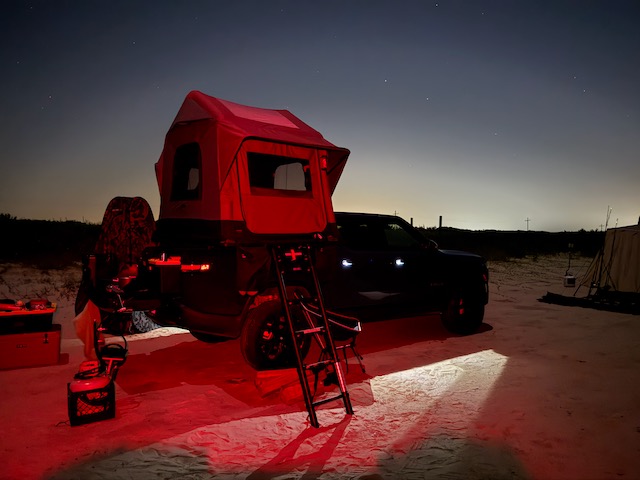
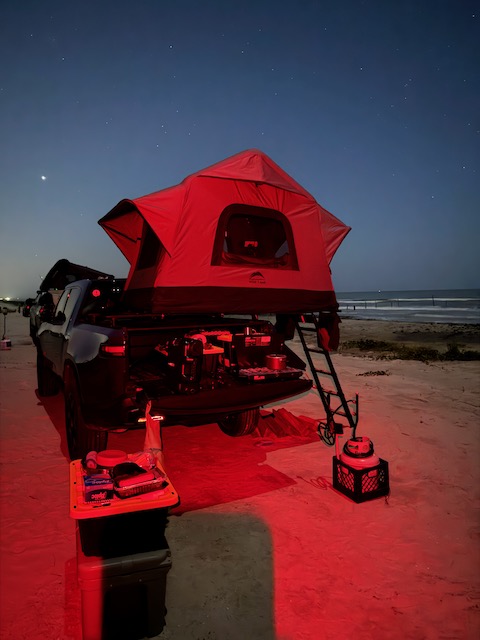
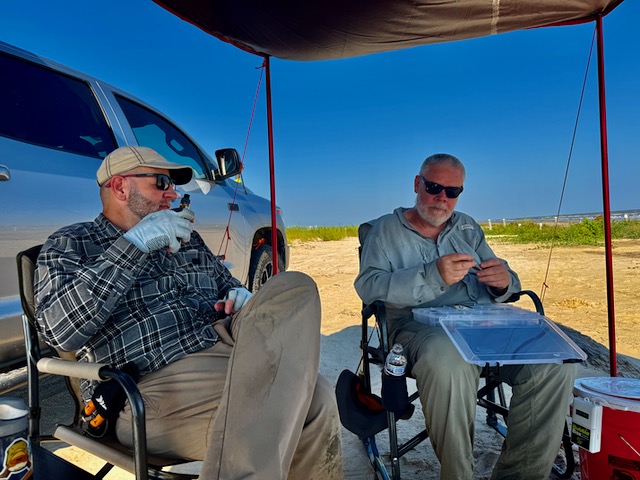
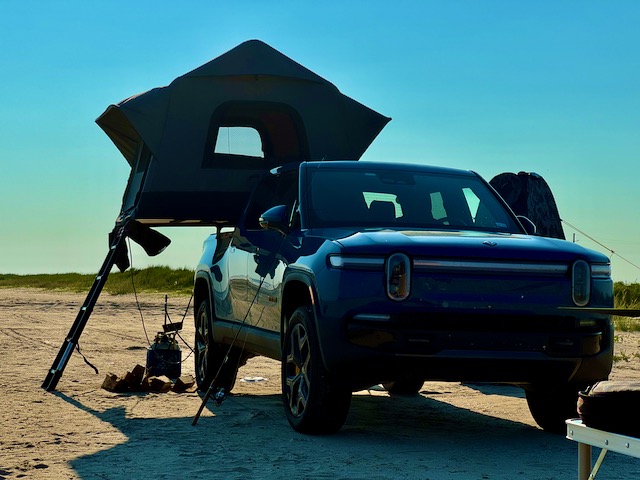
Coffee brewing, wind howling, Gary’s rooftop tent catching the first soft light of a coastal sunrise. It was all sand, caffeine, and early chatter while rods leaned idle and cast nets dripped beside camp chairs.
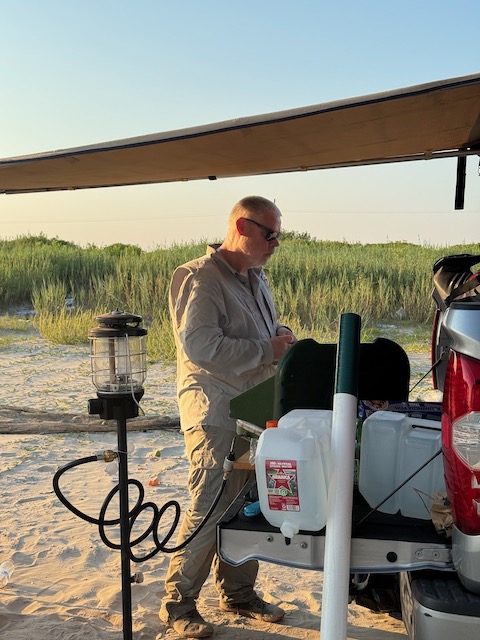
Everyone was in place now: Bret, Gary, and Dave.
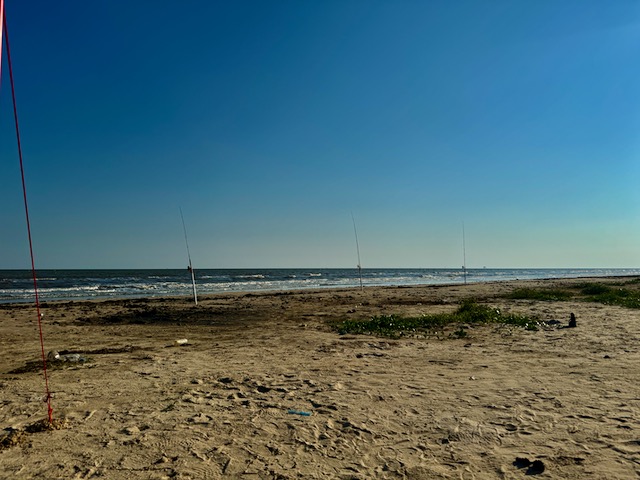
Three anglers, a full stretch of Texas beach just shy of the Louisiana line, and an ugly shoreline still half-recovering from whatever storm last swept the sand off.
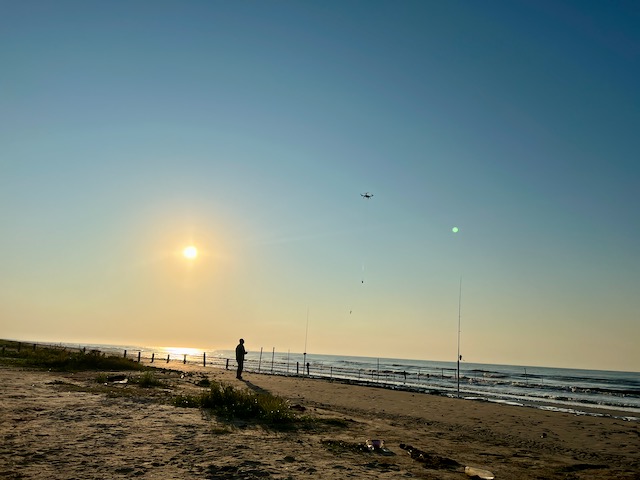
As the sun started climbing, Bret put the drone to work, flying baits past the breakers—way easier than casting, especially with the wind blowing your hat off every ten minutes. The bait menu was simple: whatever could be caught on-site. Finger mullet, pinfish, shrimp, all netted from the same muddy shallows they were fishing into.
And the fish showed up.
It wasn’t anything huge, but it was steady:
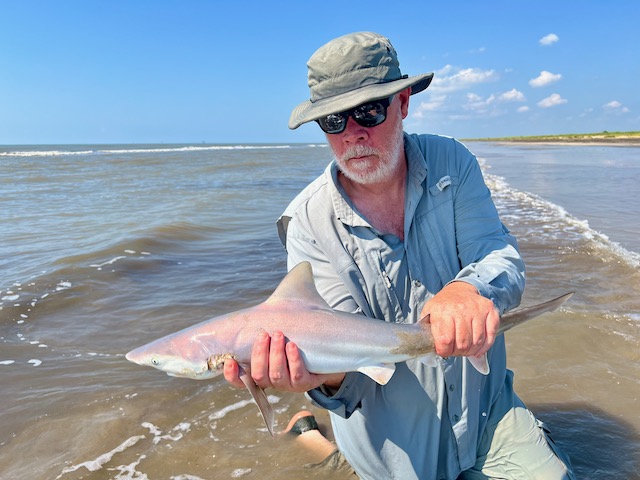
- Sandbar sharks (Carcharhinus plumbeus)
- Blacktips (Carcharhinus limbatus)
- Atlantic sharpnose (Rhizoprionodon terraenovae)
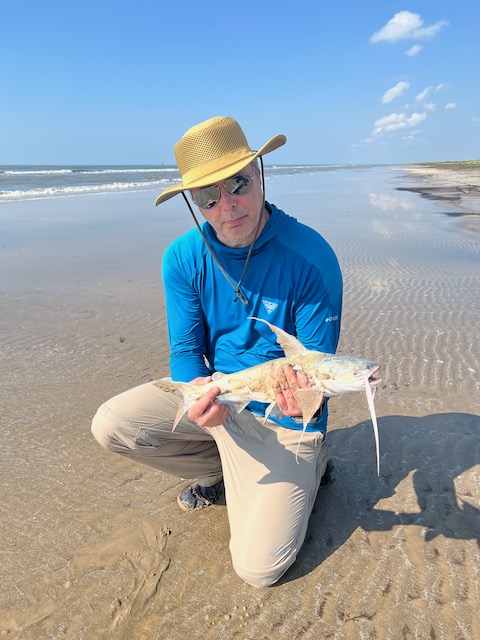
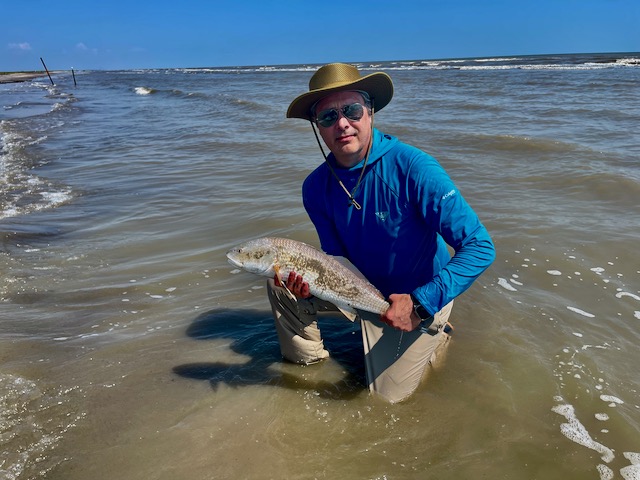
- A couple Redfish
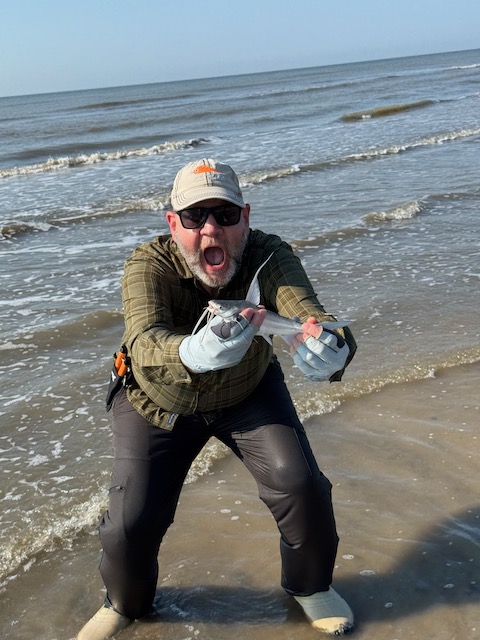
- And the always-unwelcome gafftopsail catfish (Bagre marinus)
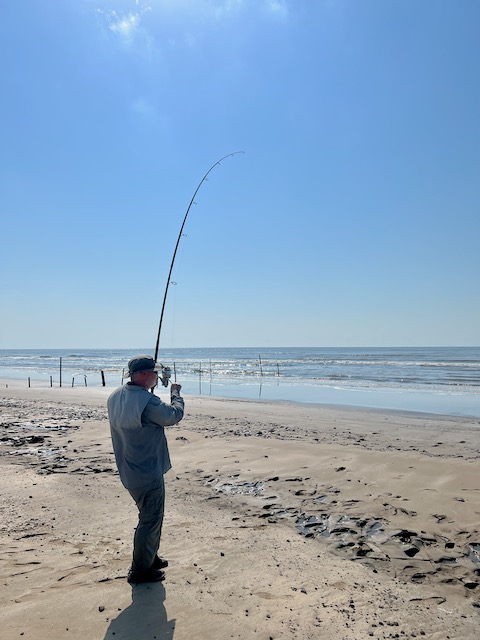
The sharks were all small, but active enough to keep the rods bent and the sand stuck in your boots. Same gear as Day 0: long surf spinning rods, big baitrunner setups in the mix, and one oversized pit reel that would get its real workout the following day.
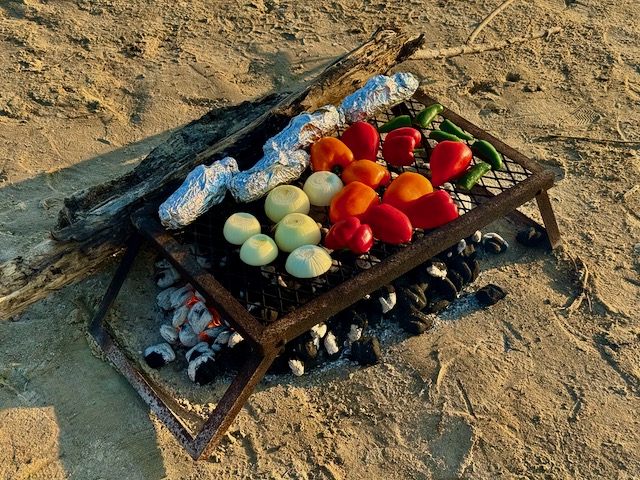
Bret made fajitas for dinner. They were exactly what you want after a day spent fighting wind and sharks the size of your leg. The beach lit up orange as the sun dropped and the wind didn’t.
And in between bites and fish, the crew spent an unreasonable amount of time pulling other people out of the sand.
Four cars and trucks pulled that day alone.
A few of them were front-wheel-drive Hondas—which says everything you need to know about coastal decision-making under the influence of optimism and 2WD.
The fish weren’t big. The beach was still ugly. But camp was dialed, the rods stayed busy, and the rescue tally was already climbing.